

Identify woodland birds on the go
Keep our pocket-sized identification guide to hand on your next walk.
Buy yours now
Digital content editor
Springtime is filled with plenty of highlights, not least the burst of birdsong that erupts as the days get longer. But as a beginner, how can you tell your robins from your blackbirds and your chiffchaffs from your chaffinches? Here you'll find the songs and calls of 11 of our most familiar songsters to help you identify the key voices when the dawn chorus hits its crescendo.
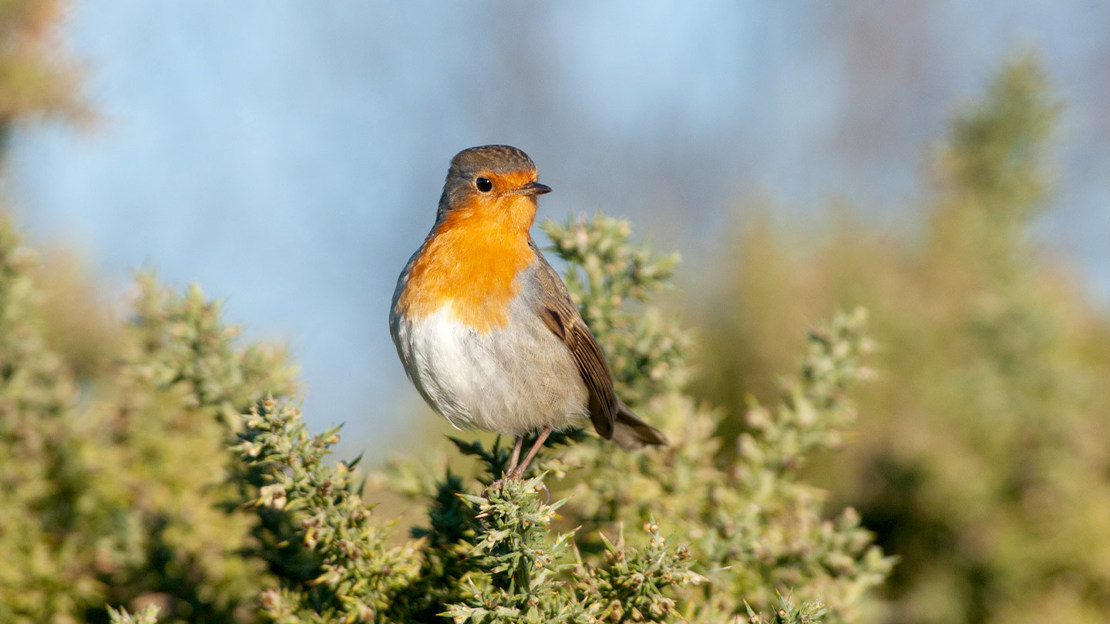
A silvery, crystalline song that becomes more wistful during the winter months.
Produces a rapid, urgent 'tic' call when alarmed.
Can be heard all year round, but especially at dusk. Artificial lighting can encourage it to sing long into the evening.
Often sings from perches like fence posts and tree branches in parks, gardens and woodland.
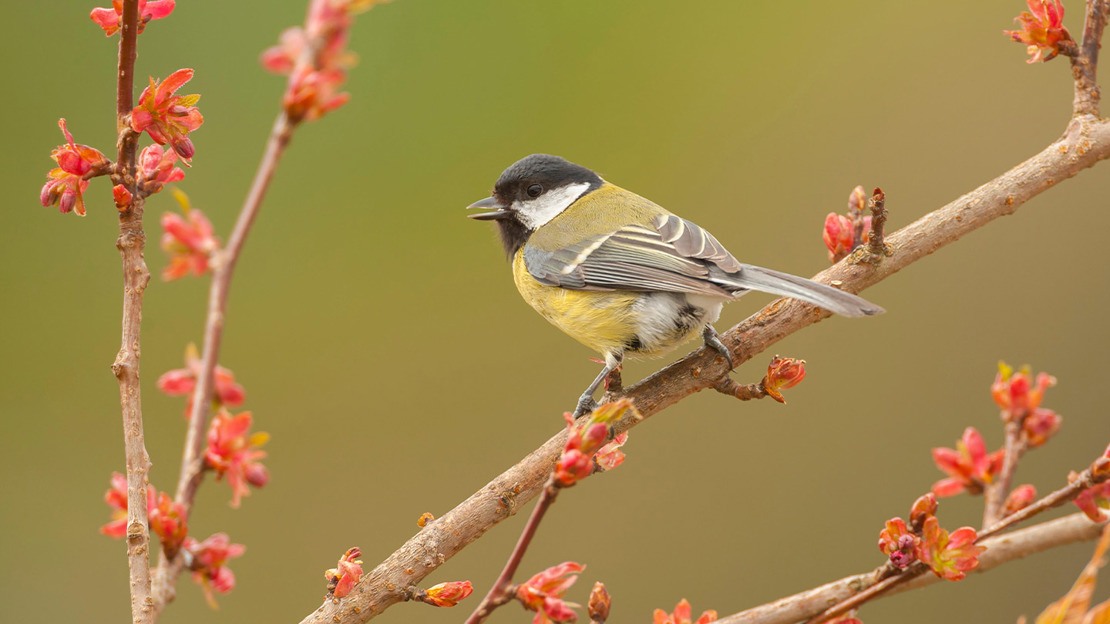
Clear and repetitive 'tea-cher, tea-cher, tea-cher' that sounds a bit like a squeaky whellbarrow.
Has a range of calls that can be difficult even for seasoned birdwatchers to identify.
Begins singing in early spring as buds begin to burst.
A familiar bird in gardens - especially around bird feeders! Also lives in woodland, farmland, parks and scrub.
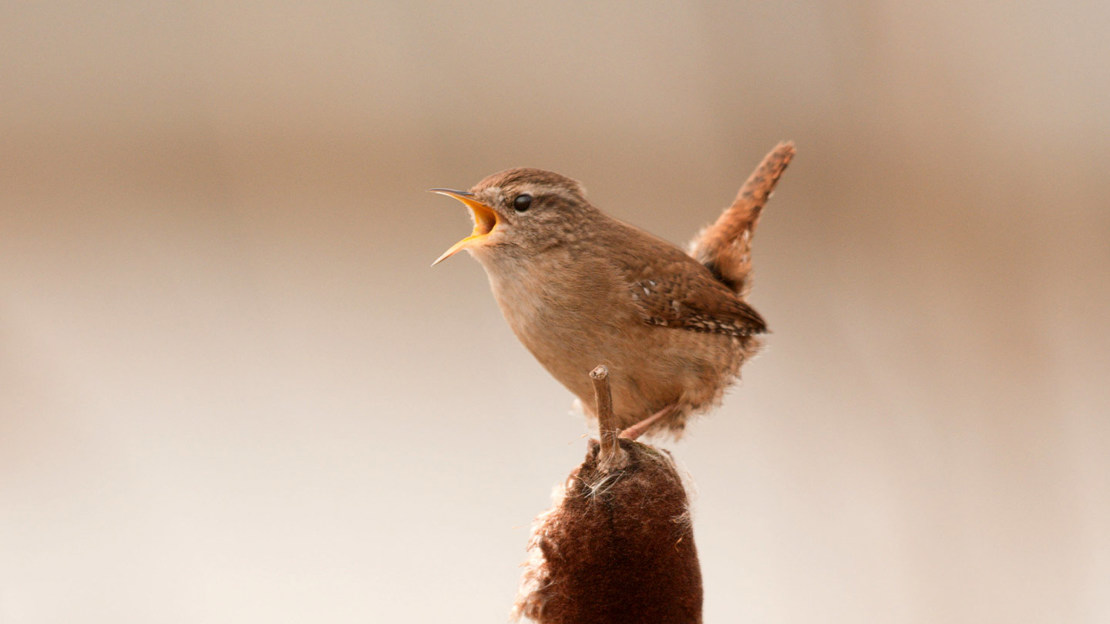
A loud burst of song with consistent phrases, including a tell-tale machine gun rattle towards the end.
A loud, rapid 'tititic' when alarmed.
Can be heard all year round but especially in spring.
One of the UK's most widespread birds, the wren lives across the country in gardens, parks, woodland, scrub, farmland and heathland.
Keep our pocket-sized identification guide to hand on your next walk.
Buy yours nowSays its name with a lively, repeated 'chiff-chaff, chiff-chaff, chiff-chiff-chaff'.
Contact calls between pairs are short 'it' sounds.
Begins singing as early as February after returning to the UK on migration.
Common during spring and summer, though often stays in the UK year-round. Lives in woodland, parks, gardens, farmland and wetland.
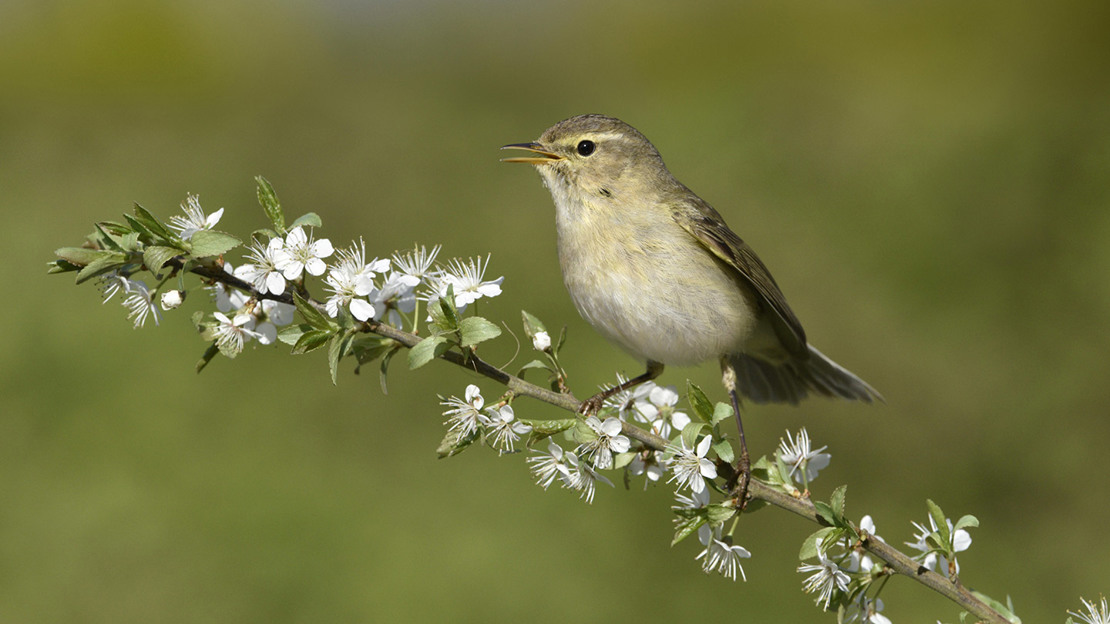
A melancholy, descending song of falling notes.
Soft 'hoo-eet' sound.
Listen for them from late March and early April once they've returned from sub-Saharan Africa.
During summer, look for willow warblers in young, open woodland, gardens and grassland.
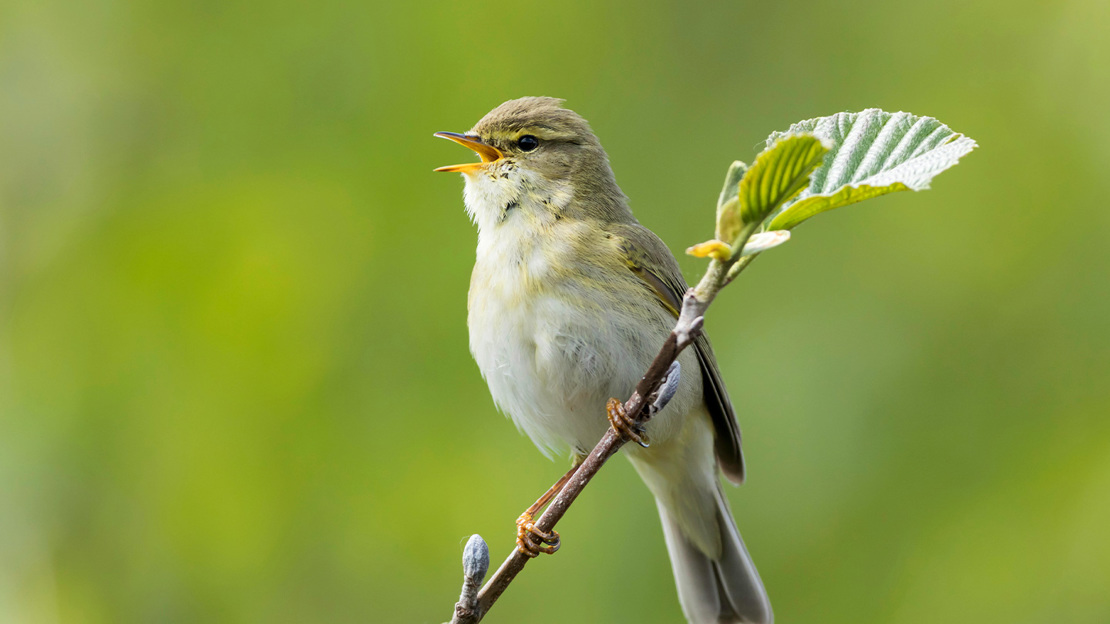
Short and fast descending song that ends with 'diddieoo', or repetitive, insistent single notes known as the chaffinch's rain song.
Contact call is an abrupt 'pink, pink' sound.
Can be heard throughout spring and summer.
Look out for chaffinches in woodland, farmland, parks and gardens throughout the UK.
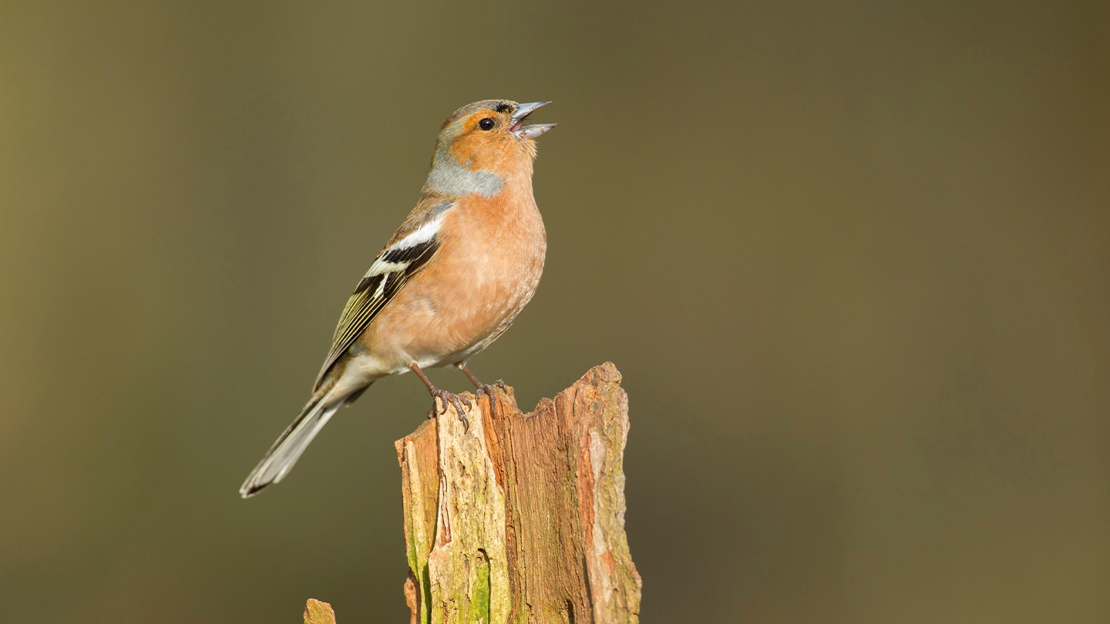
Rich and mellow with a languid pace and short pauses between phrases.
Scolding, harsh outburst when alarmed and often delivered in flight.
Typically heard on long summer evenings.
Find blackbirds everywhere except the highest peaks, including gardens, parks, woodland and grassland.
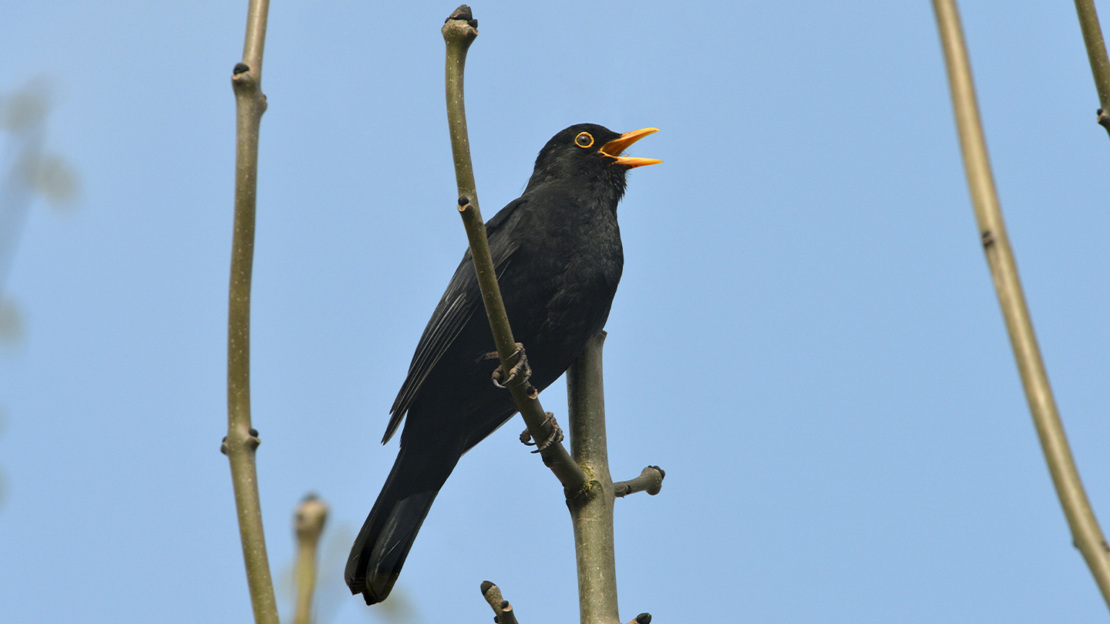
Variety of short, high-pitched phrases, usually repeated two or three times in quick succession.
Flight call is a sharp 'tsip'.
Males begin singing as early as January, particularly in early morning.
Listen out for their song in parks, gardens, scrub and woodland throughout the UK.
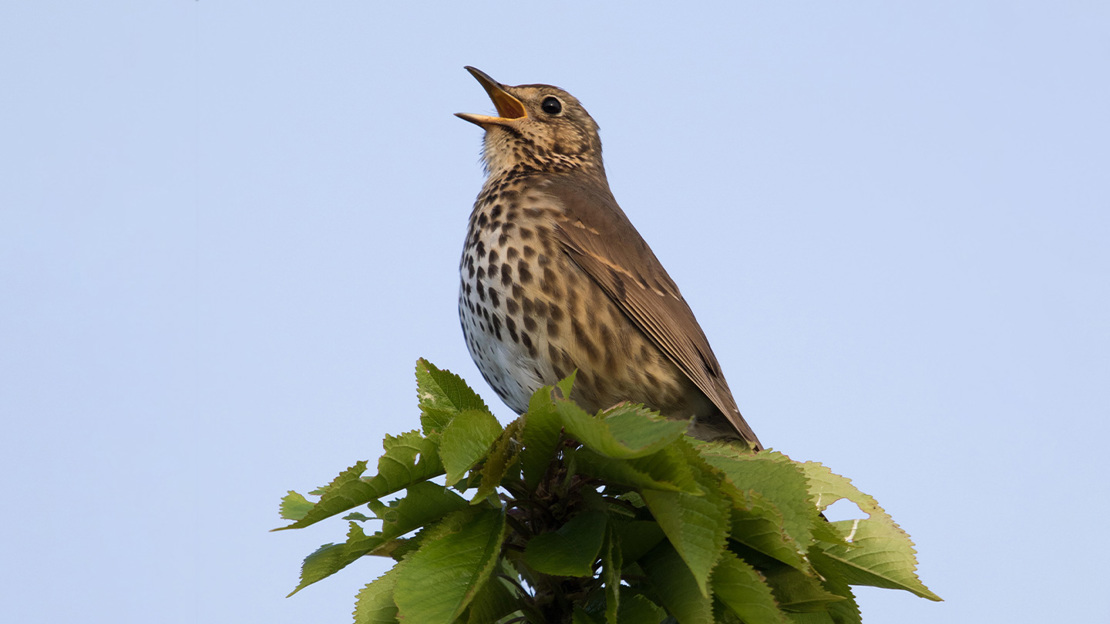
A loud and rapid 'twit-twit-twit-twit' or slower 'sirr-sirr-sirr'.
Series of harsh sounds much like the song but which come closer together when excited.
Can be heard throughout the year.
Look in broadleaved woodlands, especially those with large, old trees, as well as in parks. Occasionally pops up in gardens.
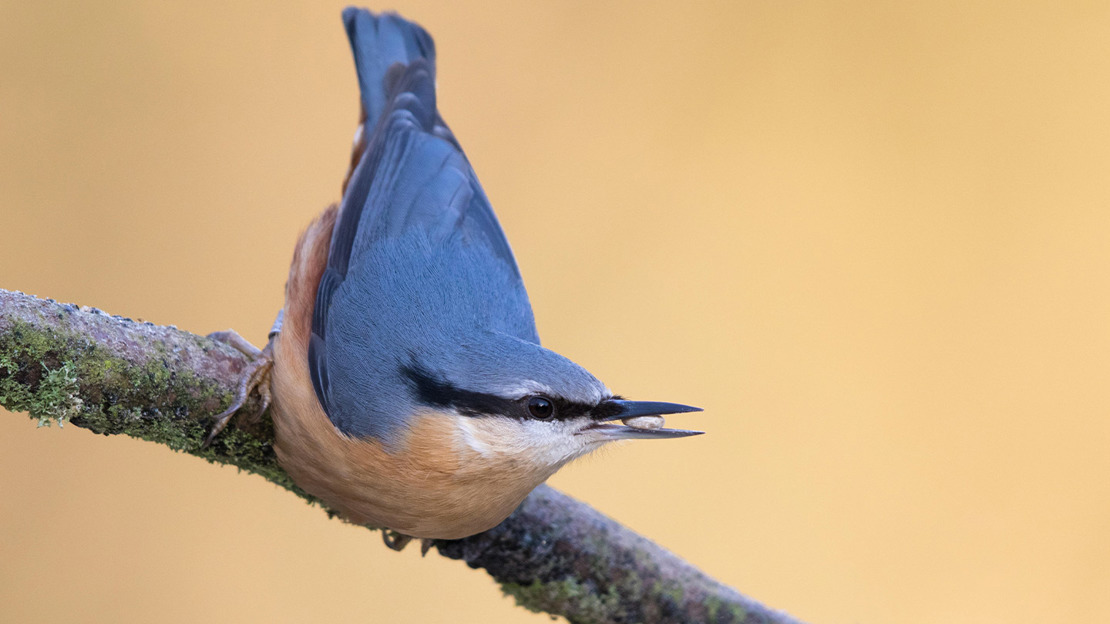
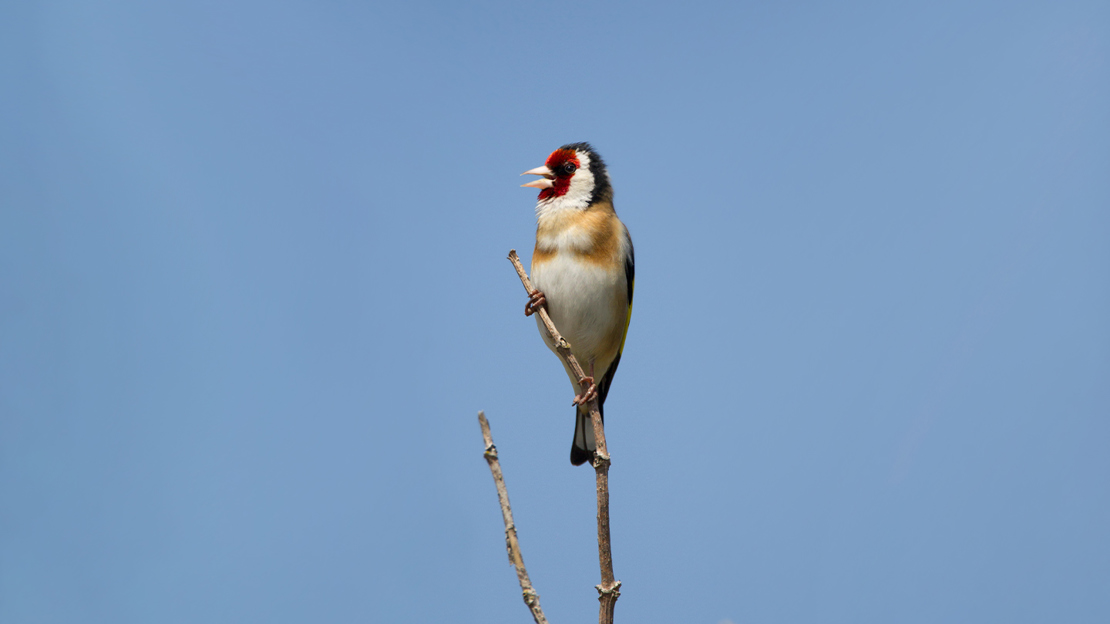
Light and twittery song with delicate phrases.
Produces various calls, some fluttery and others shrill, particularly when travelling in groups.
Listen for them from late April.
Goldfinch prefer habitats with scattered bushes and trees, such as open woodland, gardens, parks and farmland.
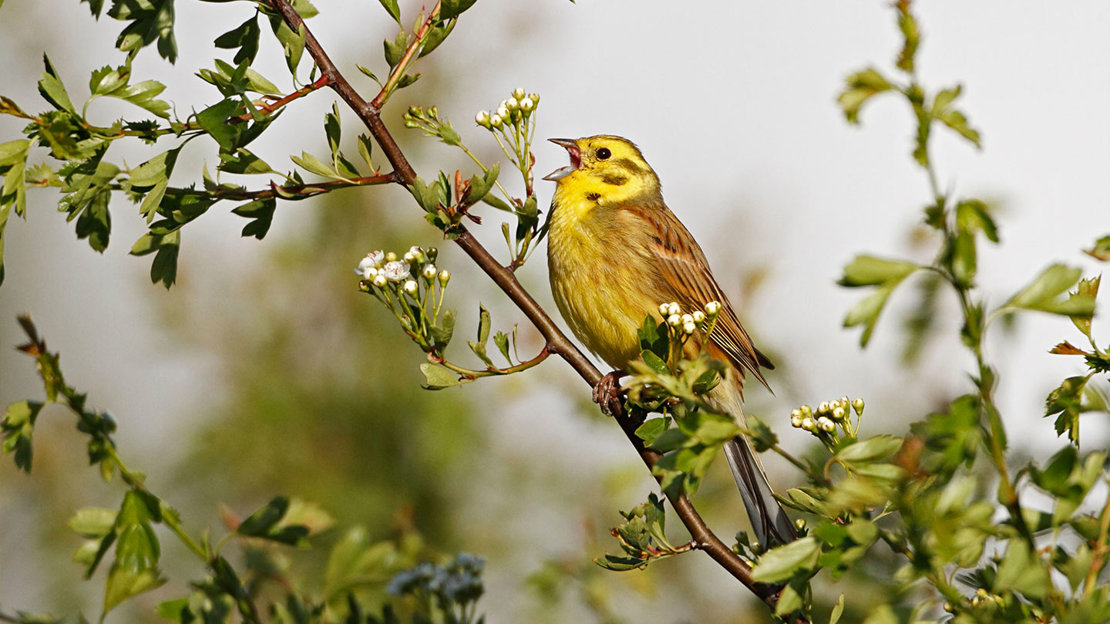
Building notes that fall suddenly away in a wheeze, famously said to sound like 'little-bit-of-bread-and-no-cheeeeese'.
Various, including 'twick' sounds and a thin 'see' when alarmed.
Heard singing from hedgerows throughout spring and summer.
Yellowhammers are farmland birds, so look out for them on farms and pasture. In winter, they might occasionally venture into rural gardens.
It’s well known that male birds sing to attract a mate and defend their territories, but what about female birds?
While both males and females make calls – such as warning calls when they’re alarmed – it was thought that only male birds had the ability to sing. But now we know that this isn’t the case.
Female birds sing too, albeit more quietly and less often, and use their song in a similar way to males: competing for food and other resources, to defend territory and to communicate with their mates and chicks.
This is particularly true of some of our most common songbirds. Both male and female robins will sing during autumn, paired female dunnocks will use their song to assert their dominance with their mates, and female wrens sing softly to their chicks.
So female birds do sing – at least some of them do some of the time.
This blog was originally published on Tuesday 13 February 2024, and was last updated on Thursday 26 March 2026 to include new information.
Keep our pocket-sized identification guide to hand on your next walk.
Buy yours now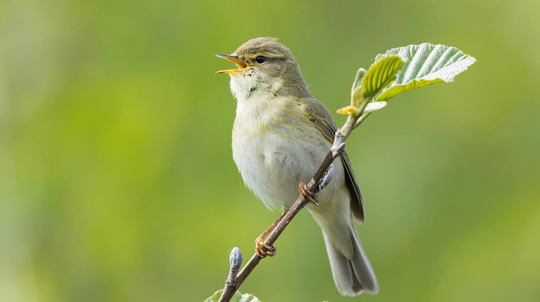
Blog
Amy Lewis • 11 Apr 2022
Blog
Amy Lewis • 01 Apr 2022
Blog
Amy Lewis • 30 Sept 2021
Blog
Amy Lewis • 10 Sept 2021
Blog
Charlotte Varela • 10 Apr 2019

Blog
Helen Keating • 05 May 2020
Blog
Hannah Vickers • 21 Mar 2019
Blog
Charlotte Varela • 12 May 2018
Blog
Hannah Vickers • 08 Apr 2019
Blog
Amy Lewis • 15 Jan 2019
Blog
Kayleigh Jacobs-Rutter • 16 Dec 2024
Blog
Charlotte Varela • 21 Dec 2023
Blog
Charlotte Varela • 15 Apr 2019
Blog
Hanako Shimada • 26 Jan 2026
Blog
Amy Lewis • 12 Feb 2019
Trees woods and wildlife
Find out more about our declining woodland bird populations, and how protecting woodland habitats is more important than ever.