Did you know?
The UK is home to more than half of the world's bluebells.

Digital Content Manager
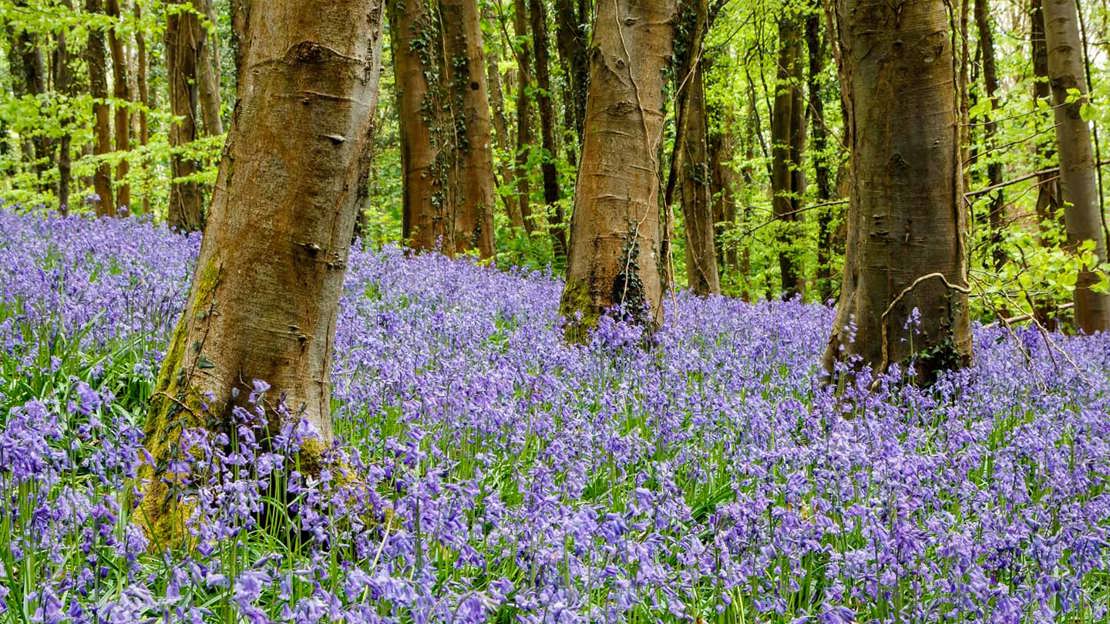
Carpets of bluebells are one of spring's greatest spectacles. From late March, woodland floors burst into violet bloom.
The UK is home to more than half of the world's bluebells.
Bluebells usually flower from late March to early May, though the timing can shift form year to year. They are one of the last spring flowers to bloom before the woodland canopy closes and new leaves block out the sunlight. If spring is mild, bluebells respond by flowering earlier. You can help us track when they flower through our citizen science project, Nature's Calendar.
When bluebells flower also depends on where you are in the UK. Like many spring events, they often appear first in the South of England, where it's slightly warmer. While the earliest flowering may occur in late March, most flowering usually happens in April. Flowers generally last a few weeks, depending on the weather.
average date bluebells first flower in the UK
according to Nature's Calendar records 2001–2025.
Bluebells are a much-loved sign of spring, transforming woodland floors into a vivid carpet of violet. Their flowers provide a vital source of nectar before many other plants are in bloom. However, climate change is threatening timings in nature. Warmer spring temperatures are forcing plants to flower before they are ready, while trees in the woodland canopy may also come into leaf sooner, casting shade over the forest floor just as bluebells are trying to grow. These changes threaten the conditions bluebells rely on to thrive, putting one of Britain’s most iconic woodland plants at risk.
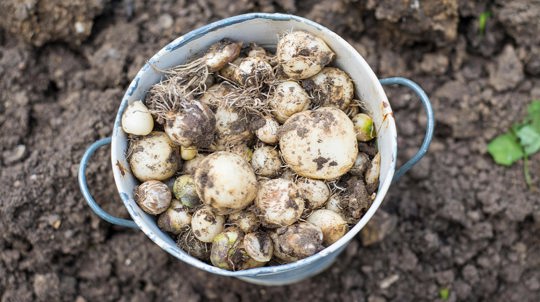
Bluebells are perennials which means they flower annually. They spend the spring soaking up energy from the sunshine and store the energy in their bulb over winter, waiting to bloom again.
Bluebells can be an indicator of ancient woodland.
Bluebells are traditionally woodland flowers. They can grow very close together, which creates a beautiful sea of bluebells. They prefer rich, undisturbed soils of long-established woods, so you're most likely to see them in old and ancient woodland. You might also spot them growing along hedgerows, and in fields and gardens.
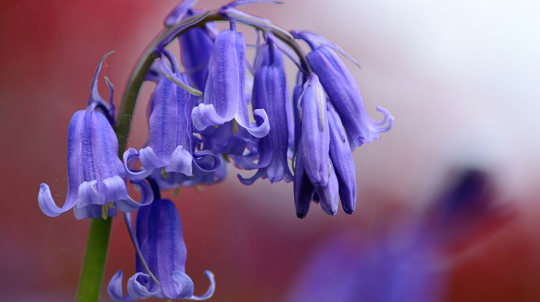
Native bluebells have a strong and sweet scent. Non-native Spanish bluebells and hybrids have a much weaker scent, so the stronger the smell, the more likely you've found a native specimen.
Discover wildflowers when you're out and about with your mini pocket guide to the UK's common woodland plants.
Visit our shopPlease stick to the paths to help our precious bluebells thrive. Check out our other top tips to help you enjoy your visit while protecting precious wildlife.
Native bluebells are protected under the Wildlife and Countryside Act 1981. It's against the law to dig up bulbs in the wild without landowner permission and landowners aren't allowed to dig them up and sell them.
Bluebells are delicate and slow to recover. It can take more than five years for a patch to establish. To help protect them, stick to paths on woodland walks and avoid picking or trampling the flowers.
These much-loved spring flowers are not only beautiful but ecologically important, so please take care to protect them for people and wildlife to enjoy.

Whether you're lucky enough to have bluebells in your garden or you’ve spotted some on a regular walk, let us know when they start flowering. It's simple and your record makes a real difference.
Nature’s Calendar tracks the effects of weather and climate change on wildlife across the UK, with records dating back to 1736. Bluebells beginning to flower is one of 150 wildlife events you can record.
Join Nature’s Calendar to record your sightings – every record helps us better understand the effects of weather and climate change on our wildlife. By taking just a few minutes to share what you see, you'll be adding to hundreds of years' worth of important data.
Tell us what you've seen and where – your sighting helps us understand how climate change is shaping our wildlife.
Record your sighting
Trees woods and wildlife
From dazzling bluebells to weird and wonderful orchids, find out which wild flowers you might see on a woodland walk and how to identify them.
Blog
Charlotte Varela • 13 May 2025
Blog
Rachel Hoskins • 14 Mar 2020
Blog
Helen Keating • 11 Apr 2019